PDS: The Planetary Atmospheres Node
The MESSENGER Mission
MASCS Exospheric Key Questions:
1. What are the composition, structure, and temporal behavior of the exosphere?
2. What are the processes that generate and maintain the exosphere?
(Note: The Magnetometer and EPPS data needed to address that are archived in the PPI node)
3. What is the relationship between exospheric and surface composition? (Note: The MDIS imaging data that provides surface maps is archived in the Imaging node and the Gamma Ray and Neutron Spectrometer data are in the GEO node).
4. Are there polar deposits of volatile material, and how are the accumulation of these deposits related to exospheric processes (Note: UVVS OH data can address this.)?
MASCS Formation and Geological History Key Questions:
1. What is the mineralogy of Mercury's surface and its variation with geological unit?
2. What is the rate of space weathering on Mercury, and how does it affect spectral interpretations?
Characteristics of UVVS
The system has a 125-mm focal length, scanning grating and a Ebert-Fastie monochromator equipped with three photomultiplier tube detectors that cover far ultraviolet (115-180 nm), middle ultraviolet (160-320 nm), and visible (250-600 nm) wavelengths with an average 0.6-nm spectral resolution and high sensitivity. The UVVS operates as a scanning-grating monochromator, obtaining one wavelength at a time.
UVVS Measurements
1.The UVVS investigates the composition and structure of Mercury's exosphere by measuring altitude profiles of known species (H, O, Na, K, and Ca), which can be used to determine exospheric temperature and density and to map the extended distributions of these species. It makes observations at a series of fixed wavelengths to search for predicted species that have not been previously detected (e.g., Si, Al, Mg, Fe, S, OH) and in spectral scans (115-600 nm) to search for new species. In addition to determining the composition and structure of the exosphere, It provides the basis for determining exospheric processes, studying the relationship between surface and exospheric composition, and studying surface-exosphere-magnetosphere interactions.
2. Together, the UVVS and VIRS measure surface reflectance at middle ultraviolet to visible to near infrared wavelengths to search for ferrous-bearing minerals (spectral signatures near 1 μ), Fe-Ti-bearing glasses (spectral signatures near 340 nm), and ferrous iron (strong band near 250 nm). These measurements are made with a spatial resolution of 5 km or better.
The Data Delivery Schedule:
Useful Documents Characterizing the Mission and Instrument
mission.cat - Describes the scientific goals and objectives of the MESSENGER program.
insthost.cat - Describes the MESSENGER spacecraft.
inst.cat - Describes physical attributes of the MASCS instrument and provides relevant references to published literature.
Available UVVS Products and Documentation
Ultraviolet and Visible Spectrometer Experiment Data Record
Ultraviolet and Visible Spectrometer Calibrated Data Record.
Ultraviolet and Visible Spectrometer Derived Data Record.
References
For basis instrument description see McClintock, W. E. and M. R. Lankton, 2007, The Mercury Atmospheric and Surface Composition Spectrometer for the MESSENGER Mission, Space Science Reviews, 131, p. 481-521.
Ongoing Publication List
The spacecraft was launched in August 2004. It completed one flyby of Earth, two of Venus, and three of Mercury before entering an orbit around Mercury in March 2011. The prime mission was successful and the mission has been extended to March 2015. For more information on the mission and other data sets see the GEO help pages.
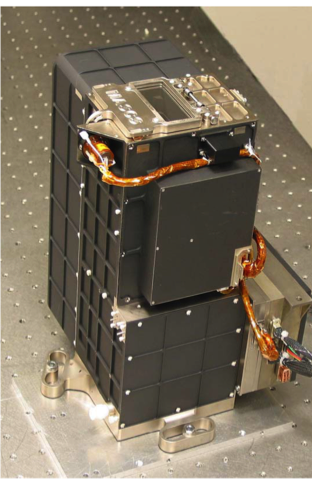
Mercury Atmospheric and Surface Composition SpectrometerMASCS is one of the MESSENGER instruments. It consists of a small Cassegrain telescope with 257-mm effective focal length and a 50-mm aperture that simultaneously feeds an UltraViolet and Visible Spectrometer (UVVS) and a Visible and InfraRed Spectrograph (VIRS). The VIRS data are archived in the GEO node while UVVS data are available in both the GEO and ATMOS nodes (MASCS).
The instrument and mission plan were designed to address the following questions:MASCS Exospheric Key Questions:
1. What are the composition, structure, and temporal behavior of the exosphere?
2. What are the processes that generate and maintain the exosphere?
(Note: The Magnetometer and EPPS data needed to address that are archived in the PPI node)
3. What is the relationship between exospheric and surface composition? (Note: The MDIS imaging data that provides surface maps is archived in the Imaging node and the Gamma Ray and Neutron Spectrometer data are in the GEO node).
4. Are there polar deposits of volatile material, and how are the accumulation of these deposits related to exospheric processes (Note: UVVS OH data can address this.)?
MASCS Formation and Geological History Key Questions:
1. What is the mineralogy of Mercury's surface and its variation with geological unit?
2. What is the rate of space weathering on Mercury, and how does it affect spectral interpretations?
Characteristics of UVVS
The system has a 125-mm focal length, scanning grating and a Ebert-Fastie monochromator equipped with three photomultiplier tube detectors that cover far ultraviolet (115-180 nm), middle ultraviolet (160-320 nm), and visible (250-600 nm) wavelengths with an average 0.6-nm spectral resolution and high sensitivity. The UVVS operates as a scanning-grating monochromator, obtaining one wavelength at a time.
UVVS Measurements
1.The UVVS investigates the composition and structure of Mercury's exosphere by measuring altitude profiles of known species (H, O, Na, K, and Ca), which can be used to determine exospheric temperature and density and to map the extended distributions of these species. It makes observations at a series of fixed wavelengths to search for predicted species that have not been previously detected (e.g., Si, Al, Mg, Fe, S, OH) and in spectral scans (115-600 nm) to search for new species. In addition to determining the composition and structure of the exosphere, It provides the basis for determining exospheric processes, studying the relationship between surface and exospheric composition, and studying surface-exosphere-magnetosphere interactions.
2. Together, the UVVS and VIRS measure surface reflectance at middle ultraviolet to visible to near infrared wavelengths to search for ferrous-bearing minerals (spectral signatures near 1 μ), Fe-Ti-bearing glasses (spectral signatures near 340 nm), and ferrous iron (strong band near 250 nm). These measurements are made with a spatial resolution of 5 km or better.
| Mission Phases | ||
|---|---|---|
| Start time | End time | |
| Phase Name | Date (DOY) | Date (DOY) |
| ----------------- | ----------------- | ----------------- |
| Launch | 03 Aug 2004 | 12 Sep 2004 |
| Earth Flyby | 19 Jul 2005 | 16 Aug 2005 |
| Venus 1 Flyby | 10 Oct 2006 | 07 Nov 2006 |
| Venus 2 Flyby | 23 May 2007 | 20 Jun 2007 |
| Mercury 1 Flyby | 31 Dec 2007 | 28 Jan 2008 |
| Mercury 2 Flyby | 22 Sep 2008 | 20 Oct 2008 |
| Mercury 3 Flyby | 16 Sep 2009 | 14 Oct 2009 |
| Mercury Orbit | 04 Mar 2011 | |
| Beginning of Mercury Years | |||||
| 1 | 4-Mar-11 | 7 | 24-Aug-12 | 13 | 3-Feb-14 |
| 2 | 12-Jun-11 | 8 | 20-Nov-12 | 14 | 2-May-14 |
| 3 | 8-Sep-11 | 9 | 16-Feb-13 | 15 | 29-Jul-14 |
| 4 | 5-Dec-11 | 10 | 15-May-13 | 16 | 25-Oct-14 |
| 5 | 1-Mar-12 | 11 | 11-Aug-13 | 17 | 21-Jan-15 |
| 6 | 28-May-12 | 12 | 7-Nov-13 | 18 | 19-Apr-15 |
The Data Delivery Schedule:
The EDR and CDR data are delivered every 6 months (March & September) with the delivery spanning the previous 12 to 6 months.
The DDR data are delivered once per year in March.
The DDR data are delivered once per year in March.
Useful Documents Characterizing the Mission and Instrument
mission.cat - Describes the scientific goals and objectives of the MESSENGER program.
insthost.cat - Describes the MESSENGER spacecraft.
inst.cat - Describes physical attributes of the MASCS instrument and provides relevant references to published literature.
Ultraviolet and Visible Spectrometer Experiment Data Record
Ultraviolet and Visible Spectrometer Calibrated Data Record.
Ultraviolet and Visible Spectrometer Derived Data Record.
References
For basis instrument description see McClintock, W. E. and M. R. Lankton, 2007, The Mercury Atmospheric and Surface Composition Spectrometer for the MESSENGER Mission, Space Science Reviews, 131, p. 481-521.
Ongoing Publication List